



There was a time when building a PC was the most economical way to play games, because given enough time, it would nearly always offer a tangible return on your investment. Even if consoles offered better upfront value, a carefully curated list of parts would deliver more performance for the money while creating a pathway for future upgrades.
That moment has passed, to be precise, about nine months ago. If you wanted to build a decent PC today, a 32GB DDR5 kit could cost you anywhere between $350 to $500, a 1TB PCIe 4.0 NVMe SSD would set you back about $200, and even a modest RTX 5060-equipped PC could approach $1,300 before you’ve factored in a monitor, the OS, or peripherals to go with it. Memory prices have skyrocketed, NAND prices are slowly rising, GPUs have become even more unaffordable, and somewhere along the way, cloud gaming suddenly started to look a lot better than it did half a year ago.
The RAM crisis has stopped feeling like a temporary fluctuation
Not even industry analysts are convinced prices will come back to normal

The 2025-2026 RAM crisis is rather peculiar in that it’s not driven by a temporary supply constraint, as seen before with GPUs during 2020 and 2021 at the height of the crypto mining boom. IDC’s latest market research confirmed that this isn’t a blip that could “correct” itself in a quarter or two.
The analysts now forecast global PC shipments to fall by a further 11.3% for a year, with conditions worsening through the fourth quarter of 2026. Jean Philippe Bouchard, the firm’s VP of Devices and Consumers, added that there’s no relief expected from the memory shortage before the end of 2027, and that prices will keep climbing as manufacturers struggle to maintain full product lineups.
Now, regardless of wherever you stand on the subject of the “AI bubble” and its supposed end, all the data available as of this moment suggests that there’s a new pricing floor for consumer memory and not a temporary spike waiting to correct. For anyone pricing out a new build, this introduces uncertainty about financing. The only realistic options are to either commit to an inflated price and make compromises elsewhere in the build, or wait indefinitely until the prices drop.
Cloud gaming is solving an essential service delivery problem
There’s a lower barrier to entry, fewer compromises, and instant access
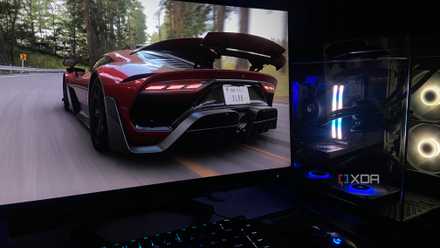
Cloud gaming has always been a subject of heated controversy in most enthusiast discourses, to say the very least. While I remain sympathetic to most of the points raised around software and hardware ownership, the very idea of ownership and the loud discouragement towards cloud gaming as a service may do more harm than good in the face of an unprecedented hardware inflation crisis with no end in sight. While it certainly may not be the ideal solution, paying $20 a month to access hardware that’s already built, already upgraded, and already absorbing the price shocks on someone else’s balance sheet does seem like a rational option given how prohibitive PC building has become for newcomers.
The concept of cloud gaming as a service beckons a new conversation in the current paradigm, particularly with a fixation on accessibility. Building your own rig right now on a budget is certainly possible, but it requires making compromises somewhere. Perhaps you drop to 16GB of RAM and hope it’s enough for the next couple of years, or drop to a smaller SSD and juggle storage constantly, or maybe pick a weaker GPU and turn down settings you’d rather have maxed out. These compromises aren’t commensurate with the price the average consumer pays for a PC today.
A cloud gaming subscription, on the other hand, seems to sidestep most of these compromises. For $19.99, GeForce Now offers the performance of a flagship Ada Lovelace or Blackwell GPU, while services such as Shadow Tech offer a dedicated PC without the constraints of a cloud provider’s curated catalog. Now, many would argue that subscribing to either of these services is tantamount to relinquishing ownership, and they would be right. However, it’s also true that these services ensure continuity of access at a time when access to gaming itself seems in question.
It’s time to take a serious look at the total cost of ownership of a PC
The real cost can show up long after checkout

Alongside the barrier to entry, there’s also another maintenance and operational cost risk that the RAM crisis has introduced in the consumer markets. PCs, by their very nature as consumer electronics devices, are susceptible to aging and eventual failure. Speaking as someone who has had two DDR4 and one DDR5 memory module fail (fortunately before inflation hit), the costs can be surprising. A failed stick would mean an $80 replacement, but now, the same fault could mean paying hundreds for a kit that’s not even sold in the same capacity you originally bought.
Then, of course, there’s the question of maintaining performance. As components across the board soar in value, maintaining the same level of performance throughout the years also beckons, accounting for eventual upgrades. Since components now cost twice or three times as much as they used to, the PC you build today will be expensive at checkout and then expensive again in two years when something fails or falls behind.
This isn’t a solution for all, but it’s a way forward for some
Most enthusiasts would never stop viewing cloud gaming unfavorably, and they are well within their rights to be skeptical, especially at a time when the very premise of digital ownership is being called into question by industry giants. However, for those merely “waiting” for prices to stabilize before they commit to a purchase, cloud gaming shouldn’t be written off entirely, especially if the investment is just worth the cost of two coffees a week to indulge on any screen they want.