

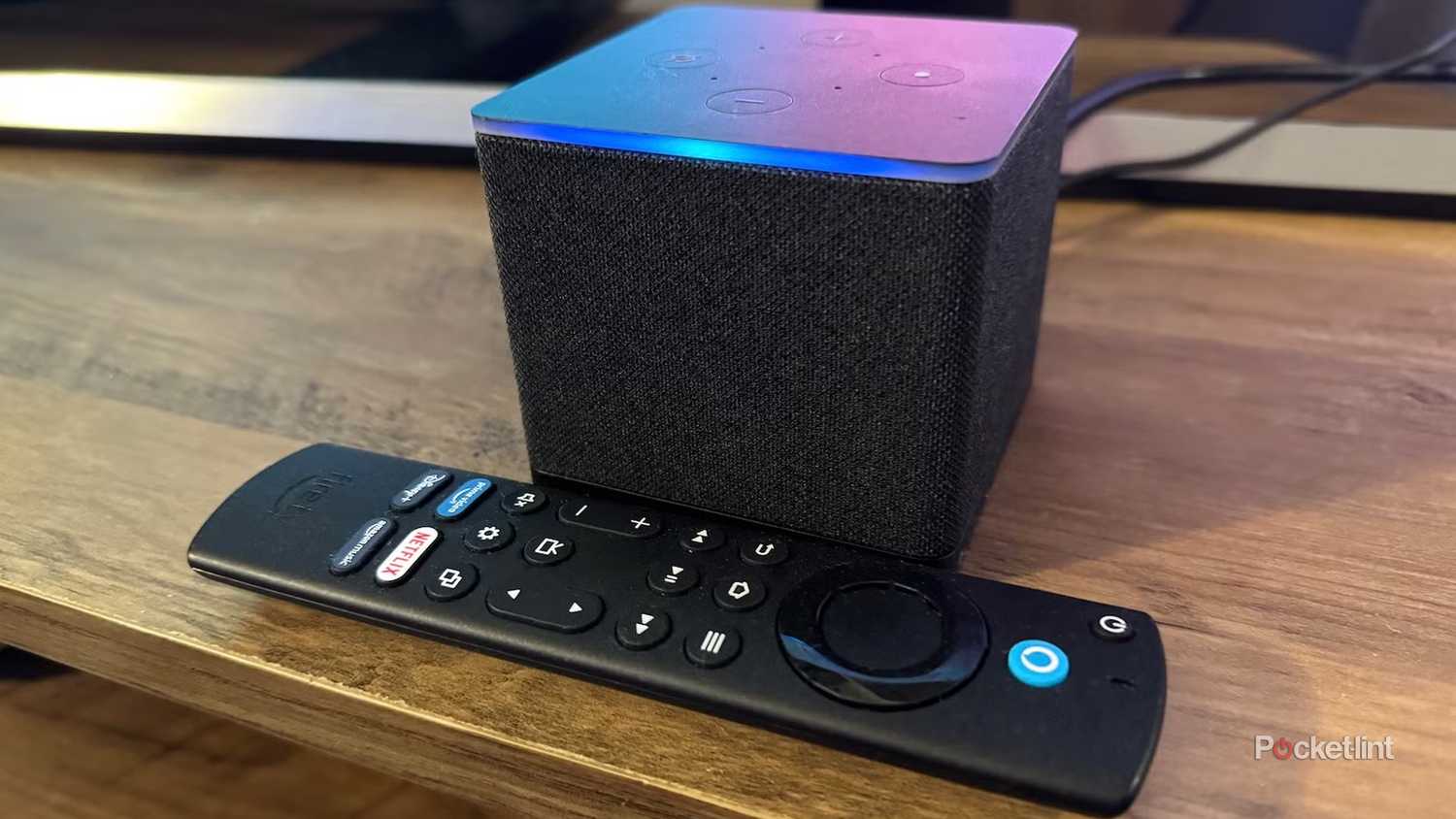


This might sound odd going into a troubleshooting guide, but normally, I steer people away from Fire TV devices. The platform is heavily geared towards Prime Video, and many products have underwhelming performance. For a while, it was virtually guaranteed that cheaper hardware would become unusable within a few years.
Thankfully, Amazon is rolling out a revamped Fire OS, and the platform has always had one thing going for it: affordability. A Fire TV 4K Stick 4K Max is legitimately one of the simplest options for taking streaming on the road, and some of Amazon’s newer TV sets are appealing, as well. If you’re going to pick one of these things up, just be prepared with these troubleshooting steps, which can solve a number of problems — sometimes without you understanding what’s at fault.
Power-cycling the device, remote, and/or your Wi-Fi router
The shotgun solution

Power-cycling is a tech support cliche for a reason — it’s easy, and it often works. When you unplug a device’s power supply, you’re clearing RAM and/or forcing software to start from scratch, which can fix problems such as stuck, missing, or otherwise misbehaving processes. While Fire OS doesn’t clear cache files when you cycle (more on this in a second), some other devices do, which can remove corrupt, outdated, or redundant data.
Generally, there’s nothing too complicated about power-cycling. Make sure no apps are active, then unplug the power (or remove batteries, in the case of remotes) for at least 30 seconds. A minute or longer is safer. If you restore power too early, there’s a chance that data will still be sitting in temporary memory.
Remember that if you’re troubleshooting your internet connection, you should unplug both your modem and router if they’re separate devices. Reconnect them one at a time, waiting until your modem has a connection before continuing.
Clearing cached data and deleting unused apps
The need for speed

At least one culprit for the slowdown of Fire TV devices is caching. Nothing made by Amazon will have more than 16GB of storage, and some products have as little as 8. That has to be split between apps, the OS, and caches, and the only thing that’s sacrificed automatically is cache space. If that shrinks too far, a device has to copy files more frequently.
On top of this, caches can sometimes accumulate corrupt, outdated, or redundant files, as I mentioned. These may cause glitches or performance hiccups. To prevent this, periodically head over to Settings -> Applications, then click Clear all Application Caches. In some circumstances you may need to dip into a Manage Installed Applications menu first.
If you think speed issues are connected to shrinking storage, there’s no choice but to start deleting apps, using the same menus as above. Ask yourself how often you actually use a particular service — there’s no point in keeping an app that you haven’t touched for many months, if not years.
Checking for app and OS updates
Make it a habit

Typically, Fire OS and its apps update automatically. Some people dislike this, but the benefit is that the next time you sit down to watch a movie or show, you shouldn’t have to waste time installing anything if critical changes were recently pushed out.
That’s the idea, anyway. Sometimes auto-update schedules might not align with your viewing habits, in which case you could be stuck with buggy software until you force an update. You may have also disabled auto-updates in the past, or only just plugged in a device that’s been sitting in a drawer for a while.
To force an OS update, head over to Settings -> My Fire TV/Device & Software, click About, then Check for System Update (or some version of that label). To manually update an app, highlight one on your homescreen, then click the Menu button on your remote. Select More Info, then Update (if a new version is available).
Doublechecking ports and cables
Basic, but essential

The limits of connected devices are highly dependent on which ports they’re plugged into. Video-wise, Fire TV streamers are currently capped at 4K and 60Hz, so they’re mostly fine if you’re plugged into HDMI 2.0 instead of 2.1 or 2.2. You should use 2.1 or later, though, if you want access to lossless Dolby Atmos, assuming your streamer and speakers support it.
If you’ve got a TV with Fire OS built-in, things get more complex. Your speakers or receiver need to be plugged into the ARC or eARC port (assuming you’re not using optical or full wireless), because other HDMI inputs will only deliver audio, not receive it. PCs, consoles, and Blu-ray players should always be connected via HDMI 2.1, since they otherwise won’t be able to exploit things like high refresh rates, VRR, or Auto Low-Latency Mode (ALLM). Verify that you’re using the correct cables, too, You can’t force 2.1 bandwidth through an old 2.0 wire.
Don’t forget that ports can break, and cables can become loose or damaged. You may want to do a little inspection, or try swapping things around if you don’t immediately spot any issues.

- Resolution
-
4K
- RAM/storage
-
16GB Storage
- Connectivity
-
Wi-Fi 6E Support