




It’s a sad fact of life that, when it comes to tech, things often get worse rather than better. Google Search used to be good and is now horrific, streaming services used to be simple and are now horribly fragmented, and printers have become actively hostile. Google’s and Amazon’s smart speakers are no different, but thankfully there is an alternative that bucks the trend.
Google Assistant has slowly gotten worse
Some of the most useful features have been removed

Instead of getting better, Google Assistant has gotten worse in recent years. In 2024, Google decided to remove multiple features that had previously worked just fine had previously worked just fine.
These included the ability to set alarms that would play specific media, accessing and managing cookbooks, managing stopwatches, using your voice to call a device, using your voice to send an email, rescheduling Google Calendar events with your voice, and more. These were useful features that Google described as “underutilized” and simply removed, making the smart speakers less useful now than they have been in the past.
Google also shut down its Conversational Actions platform in 2023. This platform allowed you to use Google Assistant to control third-party services using your voice. Once again, this was a useful feature that made Google smart speakers more useful, but the feature was killed, making the experience of using them demonstrably worse.
These aren’t the actions of a company that is focused on providing users with the best experience possible. The features already existed and already worked, and the excuse of “prioritizing the experiences you love” probably doesn’t sit well with people who loved the features that got removed.
Google Assistant is now being phased out and replaced with Gemini. While some smart speakers still offer Google Assistant, Google’s new 2026 Google Home speaker was built for Gemini. Gemini for Home is still missing some of the features that were removed from Google Assistant more than two years ago.
Amazon has put useful features behind a paywall
The best version of Alexa is no longer free

Google isn’t the only company that has made its smart speakers worse. Amazon has taken Alexa, which was once a free service, and put some of the best features behind a paywall.
One of the first features that went this way was Alexa Guard. This is a clever feature that can use your smart speakers to listen for sounds such as a smoke alarm going off or the sound of breaking glass. You can then be alerted if you’re away from home and a suspicious sound is detected.
This is a great use of smart speakers in your home, but Amazon decided to move some of the features to its paid Alexa Emergency Assist service and Alexa Guard+ has now been discontinued. The smoke alarm and glass-break detection features that were previously free are now part of the Alexa Emergency Assist subscription, so the free service has been significantly degraded.
Amazon now has a more powerful, AI-supported version of Alexa called Alexa+. This superior version of Alexa can hold more natural conversations, answer a wider range of questions, remember personal context, handle multi-step requests, and even help you create routines using natural language.
Sadly, to take advantage of these features, you need an Amazon Prime subscription or a standalone Alexa+ subscription. Locking the best features behind subscriptions makes Amazon’s smart speakers worse for the typical user, who could use the full set of features in the past at no additional cost.
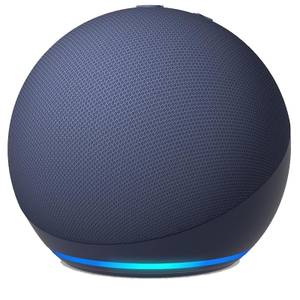
- Display
-
No
- Dimensions
-
3.9” x 3.9” x 3.5”
The Echo Dot offers a smaller form factor with the same spherical look. One of the coolest new developments in the Echo world is that the new 5th generation Dots include eero mesh network extenders. Pair one with a smart home powered by an eero mesh network and you get an instant coverage boost.
There is an alternative that’s only getting better
New features keep getting added, not removed
In a world where everything continues to get worse, there is one small beacon of light: Home Assistant. Unlike Google Assistant and Alexa, Home Assistant hasn’t gotten worse over the years. In fact, the opposite is true.
Home Assistant is self-hosted, open-source software that is completely free to install and use. While you can pay for a subscription to access convenient features such as remote access and cloud backups, you can replicate these same features yourself for free. The entire core feature set is free and is likely to remain free in the long term.
While other smart home systems continue to remove features, Home Assistant adds features at an astounding rate. Every month, a new software update is released that adds new features and other improvements to the already impressive software. Unlike Google Assistant and Alexa, Home Assistant is even better now than it was two years ago.
Home Assistant is about so much more than the features
It’s designed with privacy in mind

The continual improvement and addition of features aren’t the only reasons why Home Assistant is worth a try. It has several other benefits, too.
With Google Assistant and Alexa, you’re tied into their respective ecosystems and limited to supported devices. Home Assistant can work with an enormous range of devices and doesn’t care about the brand or whether it “works with Alexa.” If you find a smart home device, there’s a high probability that it will work with Home Assistant.
It’s also built around privacy. While Google Assistant and Alexa rely on cloud services and processing, Home Assistant is designed to let you build a completely local smart home, where everything takes place on your home network. It means your data is kept far more private, since it doesn’t end up on third-party servers.
Not everything has to get worse
While many tech products and services get worse over time, it doesn’t have to be that way. Home Assistant proves that a smart home system can continue to get better, without charging you an arm and a leg to use it.