


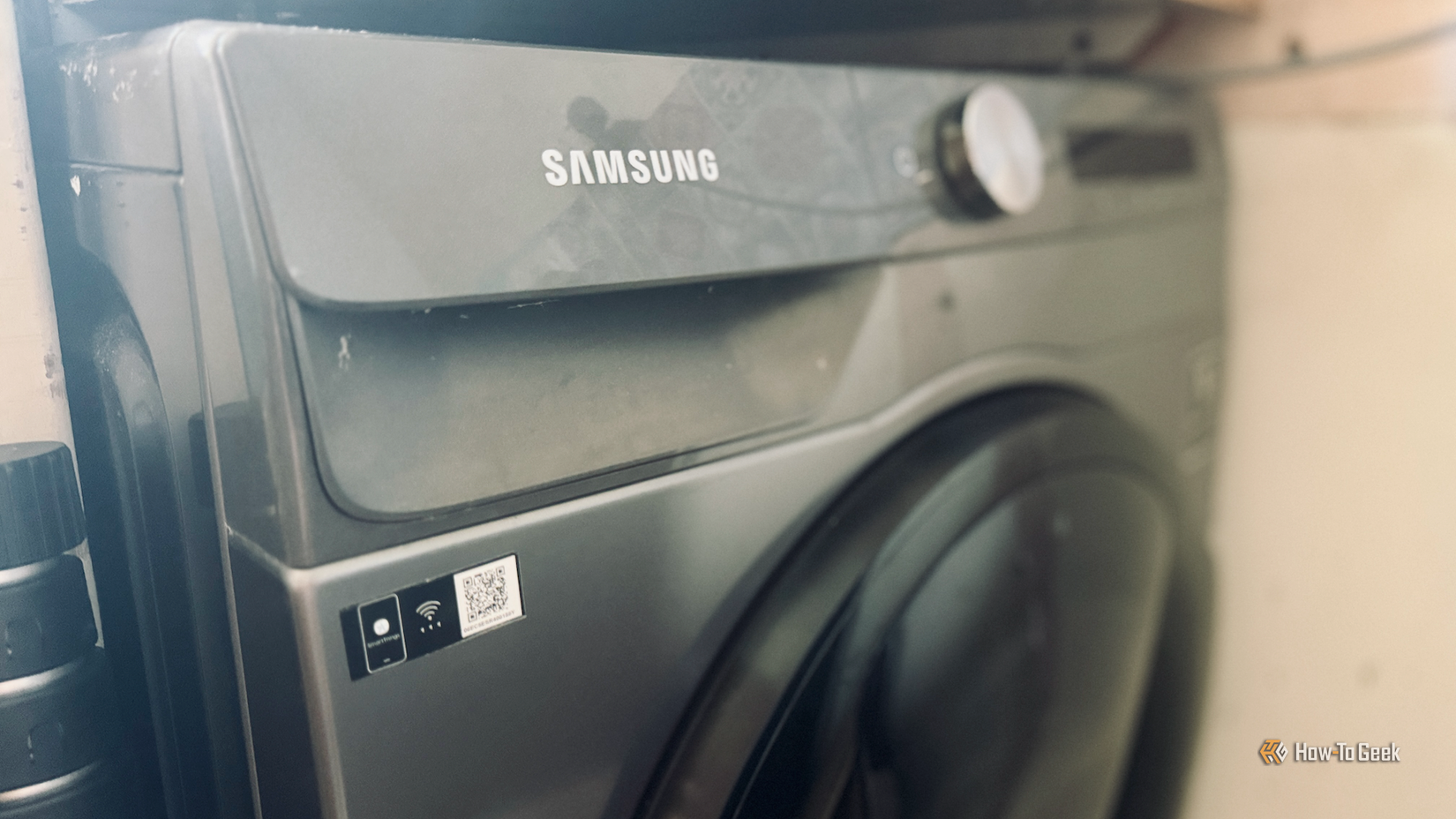





Though new appliances often boast of “smart” features, the execution is often disappointing. The truth is that you can bring actually useful smart features to your trusty old appliances with some cheap upgrades and a few minutes of your time.
Never “upgrade” your trusty old appliance for smart features; just add your own.
Washing machine
The must-have smart home upgrade

Adding laundry reminders to my washing machine has been a game-changer. I no longer have the excuse that I didn’t hear the machine’s cycle complete alert, which means I no longer discover that I’ve left wet clothes in the machine after losing myself in work all day long.
With a simple Home Assistant blueprint and an energy-monitoring smart plug, I now get mobile alerts from my washing machine. You can even add repeating alerts that make use of a contact sensor to detect when someone has emptied the machine.
Clothes dryer
Don’t just use any smart plug

Your clothes dryer might look a lot like a washing machine, but dryers use a lot more energy. You should never use an energy-monitoring smart plug with a clothes dryer unless it’s a heavy-duty version designed to handle higher power loads.
Instead, consider using a vibration sensor instead. Pair it with a vibration sensor blueprint to detect when your dryer stops bouncing around and send a notification. It’s especially good if you find yourself having to set off the dryer repeatedly to get things dry.
Dishwasher
Treat it like a clothes dryer

Much like a clothes dryer, dishwashers can be particularly energy-intensive devices. Depending on your model, a vibration sensor might just do the trick when it comes to getting intelligent alerts that a cycle has finished. You can use the same vibration sensor blueprint for this one too.
Since many dishwashers benefit from being left alone for an hour or two after the cycle has finished (to retain heat that dries the dishes), add a small delay to this one.
Range hood
Add relays and sensors to your range hood

If ever you wanted proof that there’s nothing the Home Assistant community won’t “smartify” then take a look at one of the many kitchen exhaust fan controller projects (including this ESPHome-based one). These relays activate the range hood fan based on criteria like temperature or smoke presence, depending on what you decide to go with.
You could add similar functionality to other fan ventilation systems in your house, like a bathroom fan that activates when the humidity rises.
Coffee machines
Preheat or brew, depending on what you have

I bought a lever-arm espresso machine because I couldn’t be bothered with the pre-heating and maintenance that comes with a boiler-based espresso machine. If you have one of these, you’ll understand the importance of turning the machine on a good 20 to 30 minutes before you want to make coffee so that it can get up to temperature.
A smart plug can absolutely do this for you, and works especially well if you have a set schedule. You can have the machine turn on and off at the same time every day and then get Home Assistant to send you notifications once enough time has passed. You could even devise a complex timetable so that you can get your afternoon espresso in without having to leave the machine on all day long. If your schedule is unpredictable, why not have the machine trigger with a bed sensor?
For standard drip coffee machines, like the iconic Moccamaster, you can set the machine up the night before with enough ground coffee and water and then have it turn on in the morning and literally make your coffee for you. The only downside here is not grinding fresh that morning. Even the cheapest “office” coffee machines should work this way with a smart plug.
Fridge-freezer
Is your refrigerator running?

Refrigerators and freezers don’t last forever; they tend to spontaneously die. An energy-monitoring smart plug can help by sounding two alarms: one for suspiciously low energy usage, and one for suspiciously high energy usage.
If your fridge stops consuming energy, it’s probably dead, and having a bit of warning can help you plan your next move. High energy usage can be a sign that the fridge is on the way out (or just that you’ve left the door open, though many modern fridges will have a safeguard against that).
On top of this, a contact sensor on the side of the fridge can send you alerts if the door is left open for a time period of your choosing. I’ve had my fridge for a decade, and it has a door alarm, but I don’t always hear it, so the contact sensor is a nice safeguard.
Looking for some more cheap but meaningful upgrades? Check out these kitchen 3D printing projects.