









I’ve burned through a frankly embarrassing number of AI coding tools this year, along with an even bigger heap of tokens. Along the way, I fell hard on the side of terminal-agents, wired up to a local LLM or two to help me limit my token burn. I’ve built agentic workflows that code and test without me, but I have to admit that sometimes I like the feel of a more traditional IDE.
So when Google shipped Antigravity as a full agent-first development platform, with an orchestrator surface that spins up a squad of agents to build while you watch, I had to give it a go. I thought it would be the coding tool I stuck with, but after a few weeks, I went back to Zed. Not because Antigravity is bad, because it’s not. It just doesn’t fit my workflow and I found I was spending more time managing the agents than doing any work.

This is coding on autopilot.
Specifications only tell you part of the story
Two tools, two philosophies of how to code in them
On the surface, Zed and Antigravity are very similar. Both run on macOS, Windows, and Linux, and both are agent-infused IDEs for coding. They have similar support for LLM models, use their own optimized model for edits and tab completion, and support connecting to local LLMs so you’re not always up against a token limit.
|
Zed |
Antigravity |
|
|---|---|---|
|
Architecture |
Rust, GPU-rendered (GPUI) |
Electron-class desktop app, CLI |
|
Default model |
Bring your own (Zeta2 for edits) |
Gemini 3.5 Flash |
|
Model options |
Claude, GPT, Gemini, local, via ACP |
Gemini, Claude, GPT-OSS, local |
|
Pricing |
Free, $10 monthly for Pro (unlimited edits, $5 token allocation) |
Free, $20 monthly (Google AI Pro), $100 monthly (Google AI Ultra) |
|
Open source |
Yes (editor, model, protocol) |
No |
|
Local models |
Yes (Ollama, LM Studio, etc) |
Yes (Ollama) |
|
Status |
1.9.0 (new release every week) |
2.0 (slower cadence) |
Both are free for the base tier, with a rate limit for the inbuilt models, and then have subscription tiers for higher allocation. But that’s about where the similarities end. One is an open-source editor that you happen to bolt AI onto, and the other is a closed-source Google platform that’s another way to use Gemini by default.
And the other thing? The specifications and pricing don’t tell you anything about how they feel to use, and that’s where Zed comes ahead for me.
One is open-source and fast, and well, one is from Google
I’ve had enough of Electron apps

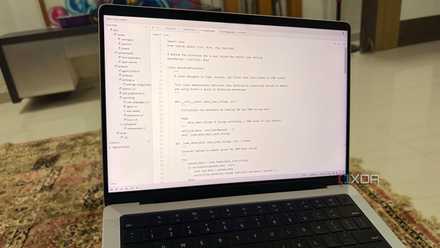
Zed feels like a finely tuned racecar compared to Antigravity, with near-instant responsiveness as soon as you start typing. That’s because it’s not a bloated Electron app; it’s written from scratch in Rust, using its own custom GPU framework that renders the UI at 120 fps. I’m not going to quote resource numbers because they’ll likely differ on your machine, but it’s fast. It feels like typing on a mechanical keyboard rather than on a touchscreen, and it does a good job keeping up with my fingers.
Antigravity is, ironically, much heavier, and as the context window balloons as you work, so does the RAM it consumes. The only fix is to restart the editor, which really kills my flow state. And when you’re watching agents code, that slowdown makes things irritating.
But it’s also a black box, with native integrations that all lean hard toward Google services. Unsurprising, but also disappointing when I found the best AI tools to be open-source. Note I’m saying tools, not models, because the best frontier models are still closed-weights. Zed’s editor, its Zeta edit-prediction model, and the ACP that connects agents to the editor are all open-source, so even if Zed goes away, the tooling can still be used.
That soothes my self-hosting soul. I run a Proxmox server with a stack of self-hosted services, including local LLMs, because I like owning my data and the tooling. An open-source editor fits that ethos; a managed platform I rent from Google does not.
Zed is the speed demon that makes VS Code and Antigravity feel sluggish
A new and faster code editor emerges
Zed works better with my AI stack
And I know where my code is going

Zed treats agents and AI like plugins, and I honestly prefer that approach. Thanks to Agent Communication Protocol (ACP), I can run Claude Agent, OpenAI’s Codex, the Gemini CLI, and the open-source OpenCode natively, switching and combining them without leaving the editor. Zed doesn’t care where the AI comes from, whether it’s an API key, a subscription, or a local LLM — it just runs it. And the Threads sidebar lets me run multiple agents at once, in full view, so I can create tests, refactor code, and fix bugs before merging them.
Antigravity does support Claude Sonnet and Opus, as well as GPT-OSS, but it’s primarily designed around Gemini models, and that’s where the token economy is focused. I prefer to route tasks based on cost, privacy, and quality, which means I want local models first and to only reach for the frontier models when those get stuck. I can’t do that with Antigravity, where Gemini seeps out of every interface.
That local-first philosophy also means I’m not stuck with five-hour credit refreshes, like in Antigravity. Zed does have some limits on tab completions, but they only count toward your total if you accept them, and I can turn the predictions off if I want to run completely locally. Antigravity won’t even quantify how the credit-to-token ratio works, and Google has already reduced the limits.

Google’s Gemini 3.5 Flash costs 3x the model it replaced, and the era of cheap AI is ending
AI had its moment, but efficiency gains are being passed on less and less.
I’d rather drive than manage, so Zed is staying on my machines
Antigravity does do one thing better than Zed: it lets you hand the entire job off to the agents, go away, and come back to a finished product. That’s what it was built for, and it shows. It also comes with many extra features, such as walkthroughs, scheduled background tasks, a CLI, and an SDK for building your own agents.
These are things you could add to Zed, but you’d be building the infrastructure instead. I don’t want to manage a team of agents, though; I have Claude to do that. What I want is a superfast editor to make quick fixes in and review code I’ve downloaded from other sources, and that’s what Zed gives me.

