






The director responsible for One Piece Film: Red, as well as the director of Code Geass: Lelouch of the Rebellion, Code Geass R2, s-CRY-ed, and most recently Paris ni Saku Étoile, Goro Taniguchi believes “white society” is actively harming the anime industry. Earlier this year, Taniguchi visited the Keio University Center for Liberal Arts, where he gave a lecture titled “The Evolution of Japanese Animation and Future Challenges from a Director’s Perspective.”
According to Taniguchi, “It’s about trying not to do anything strange, reading the atmosphere, not openly contradicting others, and showing a reasonable amount of respect to those you’re sharing the same space with. The main characters in recent Isekai anime often follow this pattern.” Anime as a medium is being held back by “prioritizing profit and losing directorial philosophy,” resulting in a medium that is failing to take creative risks, while pushing out motivated creatives who aren’t allowed to flex their creative muscles.
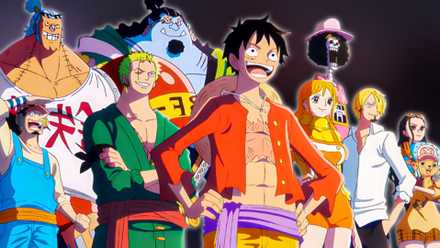
One Piece Is Officially Fixing The Biggest Flaw Of The Straw Hat Pirates
Eiichiro Oda, One Piece’s creator, is finally fixing a major flaw of the Straw Hat Pirates by giving them new power-ups in Elbaf.
Anime is Becoming Too Sanitized
Taniguchi’s lecture focused on the growth of the anime industry since the ‘60s, tracing the medium growth from Astro Boy and Space Battleship Yamato, to modern series that are becoming too formulaic. The lecture eventually touched on how “white society” and an overemphasis on Japan’s increasingly sanitized modern-day culture is actively harming the anime industry. From Taniguchi’s perspective, Anime is currently divided between the “ideal of wanting to express something and the reality of wanting to turn it into an industry.” Most fans and professionals “don’t really understand what the creators are thinking.”
While speaking at Keio University, Taniguchi expressed his worry that Japan is falling behind and losing the cultural edge that drove international fans to anime as the medium was first making its way outside of Japan. He specifically called for more “freedom of expression” in the medium, alluding to the fact that many creatives are getting stuck working on samey series that take no chances and try their best not to rock the boat.
Taniguchi ended his lecture by stating, “I still believe there is hope for Japanese anime. As long as we are human, we will always need stories. Anime can cover all of these things: broadening our perspectives on people and the world, vicariously experiencing feelings and choices, finding meaning in events, enjoying strong excitement and thrills, alleviating loneliness and connecting with others, and inheriting past events and wisdom.”
Source: Bunshun

- Release Date
-
October 20, 1999
- Network
-
Fuji TV
- Directors
-
Hiroaki Miyamoto, Konosuke Uda, Junji Shimizu, Satoshi Itō, Munehisa Sakai, Katsumi Tokoro, Yutaka Nakajima, Yoshihiro Ueda, Kenichi Takeshita, Yoko Ikeda, Ryota Nakamura, Hiroyuki Kakudou, Takahiro Imamura, Toshihiro Maeya, Yûji Endô, Nozomu Shishido, Hidehiko Kadota, Sumio Watanabe, Harume Kosaka, Yasuhiro Tanabe, Yukihiko Nakao, Keisuke Onishi, Junichi Fujise, Hiroyuki Satou
- Writers
-
Jin Tanaka, Akiko Inoue, Junki Takegami, Shinzo Fujita, Shouji Yonemura, Yoshiyuki Suga, Atsuhiro Tomioka, Hirohiko Uesaka, Michiru Shimada, Isao Murayama, Takuya Masumoto, Yoichi Takahashi, Momoka Toyoda
-

Mayumi Tanaka
Monkey D. Luffy (voice)
-
Kazuya Nakai
Roronoa Zoro (voice)


