






Portable power stations come in all sizes, from those you can carry on a camping trip to suitcase-size ones that can power a home. But the next wave of home backup power is thinner, while being stylish enough to serve as decor—and there’s one brand that has me feeling particularly hyped.
How does a mesh battery system work?
Spreading energy throughout multiple batteries
Pila Energy is applying the same kind of mesh technology we see in Wi-Fi routers and applying it to batteries. This kind of product could do away with the need for inaccessible built-in home batteries like the Tesla Powerwall entirely.
To understand how mesh networks work, let’s start with Wi-Fi. Many of us have a single router in our home that must single-handedly project Wi-Fi coverage throughout the entire living space. It must also do this while managing a growing number of connected devices. As a result, it’s not uncommon for there to be dead zones where the Wi-Fi signal does not reach or for internet speeds to slow down due to too many devices being connected at once.
Mesh Wi-Fi systems solve both of these problems. They consist of multiple smaller Wi-Fi routers working together to extend the same Wi-Fi network. Since these nodes are placed throughout the house, coverage is able to blanket the entire area. These nodes also divide up the responsibility of managing connected devices, so no one node becomes overburdened, and internet speeds are able to remain fast.
Pila’s mesh home battery system, which is currently available for pre-order for $1500 per battery, promises to do something similar with energy. The premise is simple. First, you place multiple 1.6kWh batteries throughout your home. Say there’s one in the kitchen with your fridge plugged into it and another in the home office powering a desktop or NAS. Let’s imagine a third in the living room that powers a TV. Each of these batteries can not only pull power from the wall, but they can also reverse direction and send power back into it. In this way, electronics don’t need to be plugged directly into the battery to work. You can power anything running in your home and the electricity demand will be split across the three batteries.

- Brand
-
Pila Energy
- Capacity
-
1.6kWh
Pila’s mesh home battery creates a mesh battery network by sending electricity back into the wall outlet. Its slim design supports the product being placed throughout the home as part of an everyday energy management system.
Skeptical? I hear you. Until very recently, bidirectional energy flow hasn’t been a thing. The issue isn’t technology—it’s regulations. In the US, bidirectional power outlets are against code, which makes it illegal to use a battery in this way. Fortunately, various states are currently upgrading housing codes to allow for newer technologies. My state of Virginia has become one of the first to legalize the use of balcony solar. Hopefully technologies like this are next in line.
Batteries that make the most of solar power
A mesh system that harmonizes with solar production
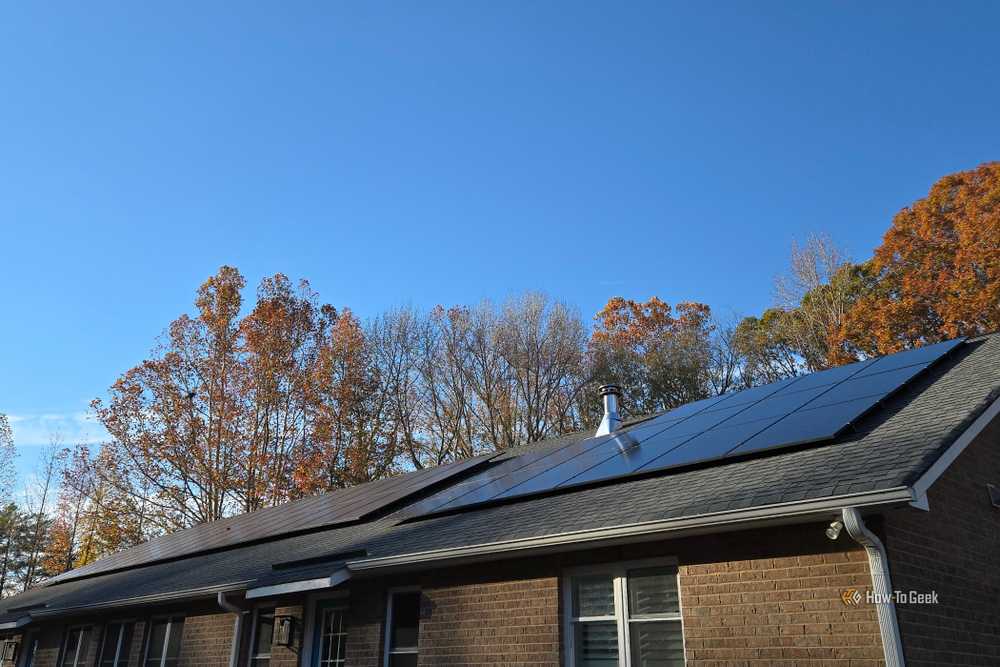
Even if the housing code never gets updated, there are other reasons why I am keeping an eye on these batteries. Pila has designed their software to integrate with systems that manage solar energy production, such as the Enphase app that manages the solar panels on my roof.
With this functionality, I could set the batteries to only charge when the sun is shining. Based on what has been shown off thus far, I could even tell certain devices that they can only run off of battery power or directly from my panels, so that I never have to pay for their electricity.
This is huge for me. As someone who has built a net-zero home, I often think about where the energy that powers my lifestyle comes from. Off-setting our energy usage through net-metering is one thing, but it’s most ideal both financially and environmentally when I know that energy is coming directly from the panels on my roof.
You don’t need solar to benefit
Batteries designed with time-of-use plans in mind

A growing number of utilities now charge different rates based on the time of day. In some parts of the country, these time-of-use plans are optional. In others, this is simply the way things are. In either case, being able to time when your devices run is to your financial gain.
Pila promises the ability to only charge your mesh home batteries when electricity is cheapest. You can set them to charge overnight and use them to run your heavy loads during the day. This way, you move most of your energy usage to the nighttime hours when electricity rates are lower.
That said, this isn’t a feature you need to wait for, and mesh batteries are not needed in order to take advantage of it. Existing power stations, like those from Anker and Jackery, already offer this functionality. But those systems are centralized, with you needing to connect the portable power stations to your home‘s electrical panel. Pila’s approach would do away with the electrical work.
Existing home batteries are prohibitively expensive
My spouse and I have over 40 solar panels on our roof, but we have yet to buy a built-in home battery to connect them to. Estimates have typically ranged from $15,000 to $30,000. In cases like ours, where net metering has eliminated our electricity bill, these expensive home batteries don’t pay for themselves, which is why we currently rely on an abundance of portable power stations instead.
Mesh home batteries that cost $1,500 a pop and don’t require added labor costs are a solution that’s much easier to build up over time, and it’s one available regardless of whether you live in a single-family home or an apartment. I’m rooting for this technology, whether it comes from Pila or someone else. Let’s hope lack of legislation doesn’t stand in the way of it becoming a reality.


