







I may not have the latest, greatest iPhone or Pixel, but I still feel like the ones I do have should be able to play some games on them. Of the five older tablets and phones I have, I wanted to know which one would be the best device to game on. I ran two tests — Geekbench 6’s GPU benchmark and 3DMark’s Wildlife Extreme — on all five gadgets and the results were fairly surprising.
Turns out, my seven-year-old iPad Pro 12.9-inch tablet held its own against — and beat — several newer devices. I was also excited to find the best gaming device in the bunch. Here’s what I found.
The testing apps used
Geekbench 6 GPU Compute and 3DMark Wild Life Extreme

3DMark has several tests in its arsenal, but I chose Wild Life Extreme as it was the highest level of graphics testing that all five devices could use. The benchmark is designed to simulate the type of GPU-intensive workloads found in current mobile games. It renders a demanding real-time 3D scene and measures how quickly the device can draw frames, giving an overall score along with an average frame rate. Higher scores generally show better gaming performance, especially for visually demanding titles.
Geekbench 6 GPU compute measures your device’s GPU performance by running a series of tasks that mimic image processing, machine learning, computer vision, and other parallel workloads. It’s not a gaming benchmark, specifically, but it does provide a useful indication of your GPU’s raw processing power, and can help explain why some devices perform better than others in graphics-heavy applications.
Here are the scores for the devices I tested:
iPad Pro 12.9 3rd Gen | iPhone 15 Pro Max | Pixel 9 | OnePlus Open | NXTPAPER 14 | |
GeekBench | |||||
GPU Score | 17339 | 28159 | 8783 | 9052 | 1358 |
3DMark Wild Life Extreme | |||||
Overall Score | 3264 | 3019 | 2648 | 3703 | 347 |
Average FPS | 19.5 | 18.1 | 15.86 | 22.18 | 2.08 |
TCL NXTPAPER 14
Great for reading, terrible for gaming

TCL’s glare-resistant giant tablet with the different e-ink style reading modes is a great piece of kit, but not for gaming. It got an overall score of 347 and a 2.08 FPS score from 3DMark, while scoring the lowest on Geekbench’s GPU test. There’s just not enough here to play anything other than the most basic of gaming titles, which makes sense given the tablet’s target market.
Pixel 9
Better than expected, but still not a gaming phone

The Tensor G4 holds its own, with a 3Dmark score of 2,648 and an average frame rate of 15.86 frames per second. That’s enough power for most mobile games, but it doesn’t keep pace with the Snapdragon 8 Gen 2-powered OnePlus Open or even Apple’s A-series chip in sustained graphics workloads. Google’s Tensor chips have traditionally prioritized AI and machine-learning features over raw GPU performance, so these results reflect that tradeoff.
iPhone 15 Pro Max
The benchmark king that didn’t win
My iPhone 15 Pro Max is getting a little long in the tooth for a tech writer to still be carrying around, but it continues to meet my needs on an everyday basis. It also did fairly well in this benchmark testing run, with a Geekbench score of 28,159, which is more than three times higher than the Pixel 9 and easily ahead of all the other devices I tested. But when I ran the actual gaming performance test, Apple’s older flagship fell to third place. It’s 3DMark Wild Life score of 3,019 and average frame rate of 18.1 FPS were beaten out by OnePlus Open and even my ancient iPad Pro. It’s a good reminder that you want to do a few different tests when benchmarking: a device can dominate synthetic compute tests while still falling behind in graphics workloads that look more like real-world gaming.
iPad Pro 12.9 (2018)
 The seven-year-old monster
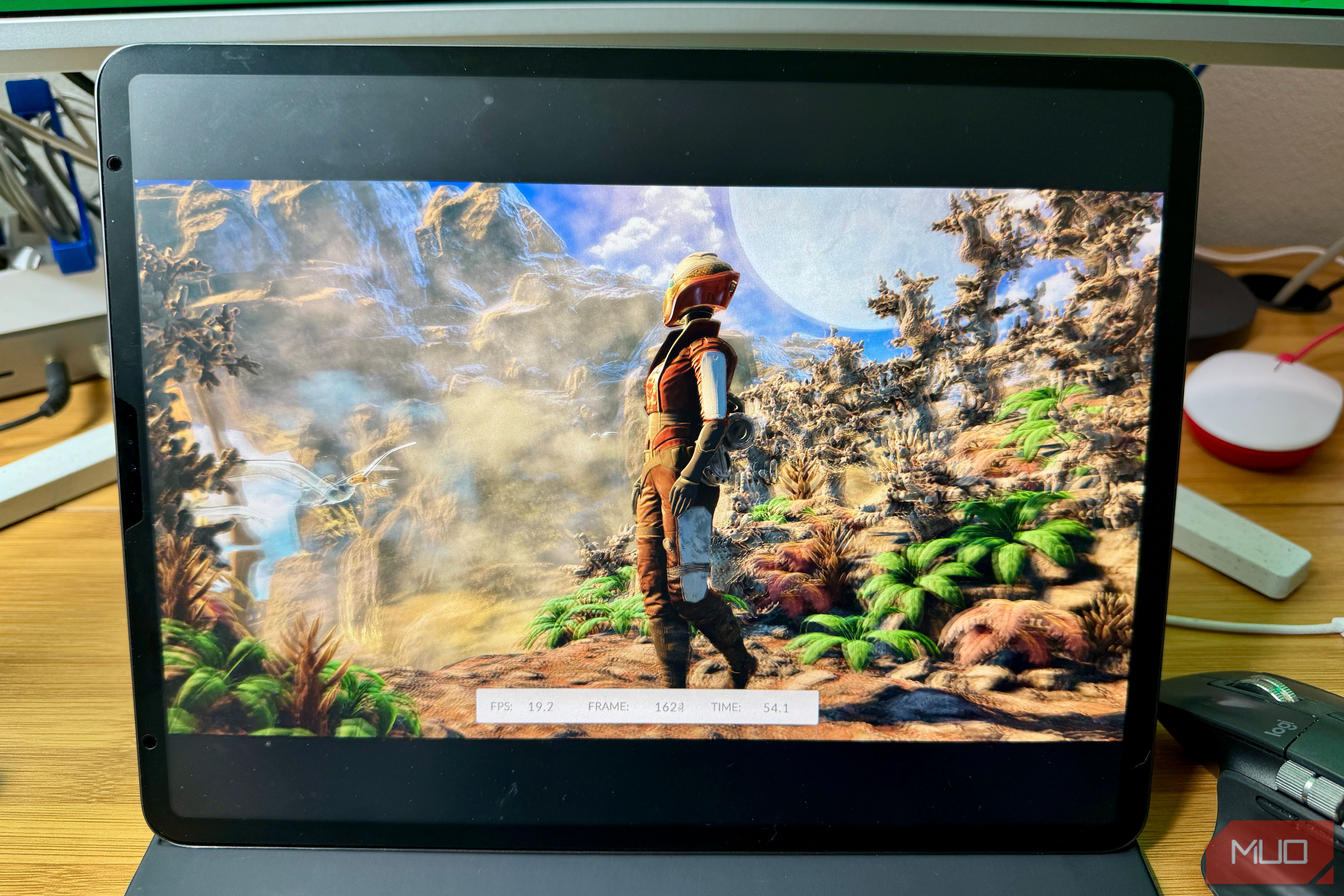 The seven-year-old monster
Look, this ancient iPad Pro 12.9 from 2018 has no business keeping up with devices released six years later. But here we are, with a 3DMark Wild Life Extreme score of 3,264 and an average frame rate of 19.5 FPS, easily ahead of both the iPhone 15 Pro Max and the Pixel 9. Apple’s A12X Bionic chip was a beast when it launched and apparently it still is. There’s a reason I haven’t upgraded it yet. If anything, this result is the most interesting data point in this whole test, and the results say more about how good Apple Silicon was in 2018 than it does about gaming on the iPad.
OnePlus Open
The gaming champ

My OnePlus Open wasn’t supposed to win this, in my head. It’s a foldable, which is typically a form factor associated with multitasking and productivity, not raw gaming performance. Apparently, its Snapdragon 8 Gen 2 is better than I even thought, with the highest 3DMark Wild Life Extreme score of the group at 3,703 and averaging 22.18 FPS. If you’re picking a device from this list to game on, the answer is the foldable.
Benchmarks don’t lie — but they don’t tell the whole story
These results are a good reminder that benchmark numbers don’t always mean what you might think they mean at first. The iPhone 15 Pro Max posted a Geekbench GPU score that beat out all the others, but it finishes third in actual gaming performance. My geriatric iPad Pro nearly beat phones that released only a couple years ago. The best chip on paper isn’t always the best one for the game you’re actually trying to play.
What matters for mobile gaming is sustained GPU performance under load, and that’s what 3DMark Wild Life Extreme is designed to measure. If you’re looking to find out which device is the best at handling demanding games, focus more on the graphics scores, not the GPU compute benchmarks.
By all these measures, then, my OnePlus Open is the clear winner, followed by the iPad Pro if you don’t mind gaming on older hardware. Sure, the iPhone 15 Pro Max is still respectable, but it’s starting to show its age.


