





The ESP32 can power all sorts of useful sensors, but some of these projects are more important than others. Many of these projects use the same sensors that you’ll find in commercial products (which are also frequently powered by microcontrollers like the ESP32).
Though these won’t necessarily replace connected commercial systems or emergency services, they can still play an important role in the home.
Flame and fire detection system
Detect open flames and smoldering fires

Flames emit infrared radiation, which means they’re relatively easy to detect using the right sensor (like this one). By pairing this sensor with an ESP32 microcontroller, you can use a tutorial to throw together a simple flame detector. You can also use ESPHome with a sensor like the KY-026 to get this information into Home Assistant relatively easily.
You can go even further with this concept and build a whole fire detection system. The ESP32 AI Fire Detection System takes a multi-sensor approach to detecting flames, heat, air quality, and gases associated with a fire. It’ll cost you a lot more, but you’ll get ambient and object temperature detection, smoke and carbon monoxide detection, and on-board AI camera analysis.
Carbon Monoxide sensor
The silent killer

Building a dedicated carbon monoxide (CO) sensor is a simple and cheap way to detect a gas that is otherwise invisible. CO is odorless and cannot be seen, but is known as a silent killer that’s associated with gas heaters, water boilers, and stoves. You can never have enough of them, especially if you live in a home that uses gas appliances.
The ESPHome project has native support for the MQ-7, a sensor that is solely focused on detecting this dangerous gas, and the Grove Multichannel Gas Sensor V2. Thanks to ESPHome, these can be integrated neatly into Home Assistant so that you can sound the alarm in any way you desire: smart speaker alerts, sirens, flashing lights, mobile notifications, or all of the above.
Smoke and gas detector
Be warned before disaster strikes

The MQ-2 is a gas sensor that can detect a variety of potentially harmful gases including liquefied petroleum gas (LPG), alcohol, propane, hydrogen, methane, and carbon monoxide. It’s an all-in-one bag of tricks that you can combine with an ESP32 to build a simple alert system.
This particular guide sounds a buzzer and turns on an LED. You could expand it by sending an alert to an MQTT broker, a messaging platform like Telegram, or by connecting a more noticeable LED or audible alert.
Air quality and hazard monitor
Trigger air purifiers automatically

One of my favorite ESP32 projects is Project Aura, which we have featured on How-To Geek before. This is a professional-grade air quality monitor that’s capable of detecting particulate matter (PM), volatile organic compounds (VOCs), nitrogen oxide (NOx), formaldehyde, and the usual temperature and humidity readings you’d expect in an ambient air monitor.
Project Aura is a 3D-printed project with a $30 entry fee for the STL, pre-built firmware binaries, and a detailed step-by-step assembly guide. Total cost comes in somewhere around $170 for all the components to build a device that punches well above its weight in terms of commercially available pre-built sensors.
In addition to a dedicated touchscreen and web interface, the air quality monitor easily integrates with Home Assistant so that you can use it to automate air purifiers, ventilation, close windows, and whatever else you have hooked up to your smart home.
Sleep, fall, and life detection
Using radar to detect pose
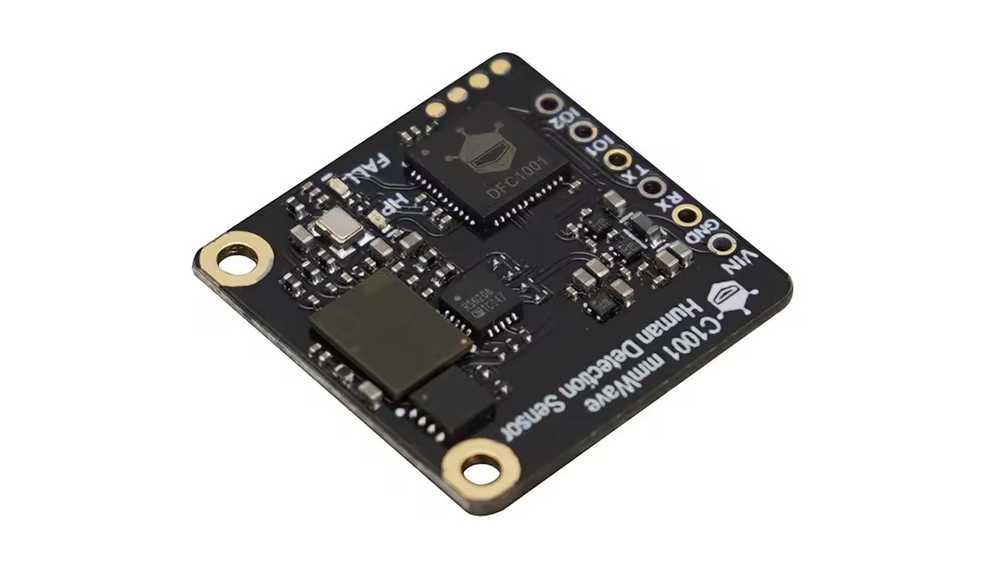
mmWave sensors are highly sensitive bits of kit that use radar to detect presence. The DFROBOT C1001 is a 60GHz variant which has much greater sensitivity than the 24GHz mmWave sensors that are typically used for simple presence detection. These babies can recognize posture, which means they can also detect sudden movements like slips and falls.
Combine it with a simple ESP32, some wires, and a breadboard and create a potentially life-saving sensor that can detect problems in areas like bathrooms without compromising privacy. This tutorial uses the Arduino IDE and includes all the source code you will need.
Got a 3D printer? Check out some projects that use an ESP32 to improve your printing experience.


