







Traditionally, TV shoppers have been conditioned to hunt for a particular set of specs. The eternal king is size, because it’s the biggest dictator of price, and many of us are chasing a cinema-like experience. In the past decade, though, a number of other items have been added to the list, including resolution, HDR support, and refresh rate.
More recently, an underdog has emerged near the front of the pack: color accuracy. Companies like LG and Samsung are claiming that their RGB mini-LED and MicroLED TVs can hit 100% of the BT.2020 color gamut, something that even the best OLEDs have struggled to achieve. Meanwhile, we’re seeing the first sets with Dolby Vision 2 and HDR10+ Advanced, which support up to 12- and 16-bit color, respectively.
How much does any of this matter, though? The short version is that you should treat superior color performance as a perk, rather than the reason to chase a TV. You’ll understand why in this guide.
What are color gamuts and bit depth, and why do they matter on your TV?
A frame around reality

A color gamut is the particular range of colors a device can reproduce. On charts, gamuts are often depicted as small triangular borders within a much larger “wave” representing what’s detectable by human eyes. Depending on the industry, you’ll find a variety of gamuts in use, such as sRGB, DCI-P3, Adobe RGB, or Rec. 709.
The most important gamut within the TV space (at the moment) is BT.2020, also known as Rec. 2020. That’s because it covers 75.8% of your color perception, whereas Rec. 709 includes 35.9%, and even DCI-P3 only reaches 53.6%. Note that you can only see these extended colors when HDR is active — the acronym stands for “high dynamic range,” after all.
The most obvious benefit of covering the BT.2020 gamut is that images can appear more vibrant, or at least more natural. While it’s increasingly subtle, the absence of certain colors is one of the ways your brain can tell it’s looking at a screen rather than the real world. Although you may not suddenly confuse your TV for a window, people tend to find a wider range of colors inherently pleasing.
It’s also about accurate reproduction, hence the term color accuracy. If a scene in a movie, show, or game contains certain colors, but your TV can’t cover that segment of the gamut, images will look off. The discrepancy usually isn’t dramatic. It does mean, though, that you’re not seeing things the way a creator intended, or at least mastered them for.
On a subtler level, more colors allow for smoother rendering. Typically, there isn’t a hard line between two radically different onscreen colors. Instead, there’s a transition, and this looks better if you have all the colors needed to fill in the gaps. If there’s a severe deficit, the result is an effect called color banding, so named because you see stripes instead of a true gradient.
This is where color depth comes into the picture. SDR (standard dynamic range) uses 8-bit rendering, assigning 256 shades each to the red, green, and blue (RGB) channels. The result is up to 16.7 million possible colors, which sounds impressive — except of course that more are possible, and it’s 8-bit color that’s most likely to produce banding.
Any TV you can buy today will offer 10-bit color for HDR. This extends the palette to 1,024 colors per RGB channel, for a whopping 1.07 billion in total, of which BT.2020 is a slice. It’s what you’re seeing whenever any version of Dolby Vision or HDR10 is active.
So why aren’t extended colors a huge selling point?
Seeing and noticing are two different things

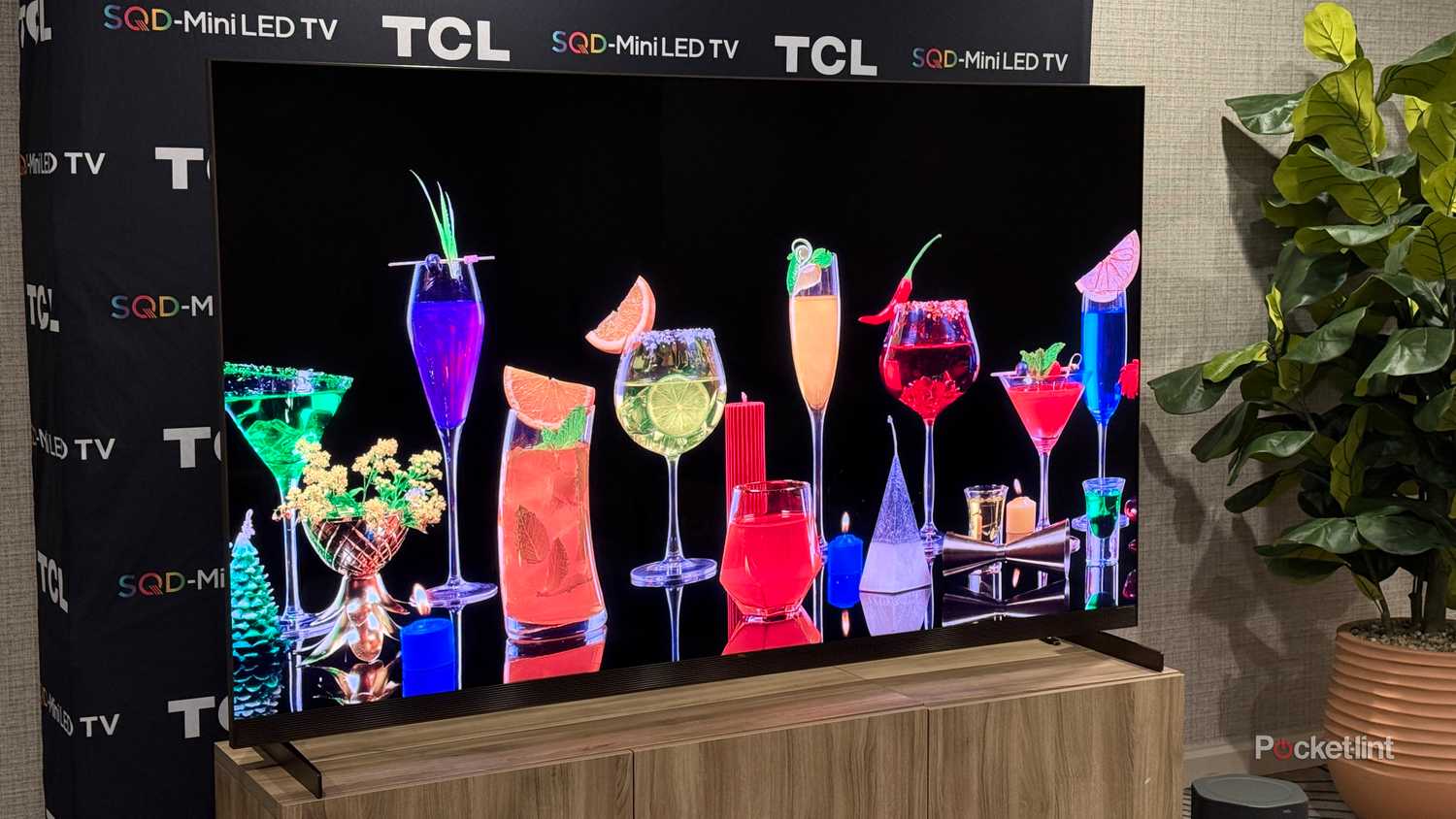
For a start, 8-bit color often looks fantastic on modern TVs. That’s been possible because of a number of technologies developed over the years, such as quantum dots, which improve both color accuracy and brightness. I challenge someone to watch the SDR version of Samsara on a QLED or QD-OLED TV and come away feeling robbed of something. On my QD-enhanced mini-LED TV, colors are so bright and vivid that I’ve never thought of maxing out my TV’s brightness settings, at least until now.
Clearly, there is value in making the leap to 10-bit color to get the accuracy and natural feel possible with HDR, reducing rendering flaws in the process. Once you’re past that threshold, however, there are diminishing returns, simply because most of the extra colors are going to be intermediary ones your brain has trouble distinguishing. My favorite color is burnt orange — already a variant — but there are dozens of similar shades recognized by companies like Pantone, and on a TV, even incomplete BT.2020 coverage is going to multiply that number further. You could probably put hundreds of burnt orange shades in front of me that I would have trouble telling apart.
It’s also worth pointing out that the BT.2020 gamut is simultaneously skewed and incomplete. Much of what it covers falls under shades of green, with red, blue, yellow, orange, and purple getting relatively short-shrift. That’s not to say your TV’s output has a green tint — just that it excels at those shades, which isn’t going to help you much if you’re watching Dune or The Shining instead of the jungle-based Apocalypse Now.
If the choice is between a 75-inch mini-LED TV with 89% BT.2020 versus a “perfect” 55-inch RGB mini-LED set, go with the first option.
As for it being incomplete, that merely steals thunder from some of the “100% coverage” claims. You’re still missing shades of every color. Mostly, it’s additional greens, but there are extreme shades of all the other colors that are being left offscreen. If and when electronics makers can achieve those on an affordable TV, they’ll probably feel far more valuable than seeing every possible hue in a tree leaf.
Something I haven’t touched on yet is color depths beyond the 10-bit level. Currently, no TV you can buy actually supports a 12-bit rendering pipeline, much less 16-bit. Setting a source like a game console or media streamer to 12-bit may still help reduce banding, yet it’s already such a non-issue with 10-bit content that this ends up being insurance more than anything.
As I suggested up top, it is worth factoring color performance into your shopping. In fact I’d recommend a set with 90% BT.2020 coverage or higher, since that’s increasingly easy for TV makers to achieve. You just shouldn’t feel sorry if you fall short. If the choice is between a 75-inch mini-LED TV with 89% BT.2020 versus a “perfect” 55-inch RGB mini-LED set, go with the first option — you’ll get a lot more out of the enhanced immersion, not to mention more noticeable 4K detail. At 55 inches, it’s tough to tell the difference between 4K and 1080p.