





You might already be immersed in it yourself, but if you’re not aware, physical media is in the middle of a resurgence. It’s not too surprising, perhaps, since streaming services keep hiking prices, and titles are perpetually vulnerable to being removed — sometimes even if they were made by the platform hosting them. There’s a satisfaction in knowing that no one can take away your right to watch your favorite movie.
The wave is even prompting a lot of people to pick up DVDs and VHS tapes, whether out of nostalgia, or simply because they’re dirt cheap. The idea does have some appeal to me, as a kid of the ’80s and ’90s. But several factors are steering me away, and they should be on your radar too if you’re tempted to pick up Aladdin or Blazing Saddles at a flea market. It’s not just the usual streaming conveniences swaying my opinion.
DVDs and VHS tapes have an expiration date that’s coming up fast
Always do your homework

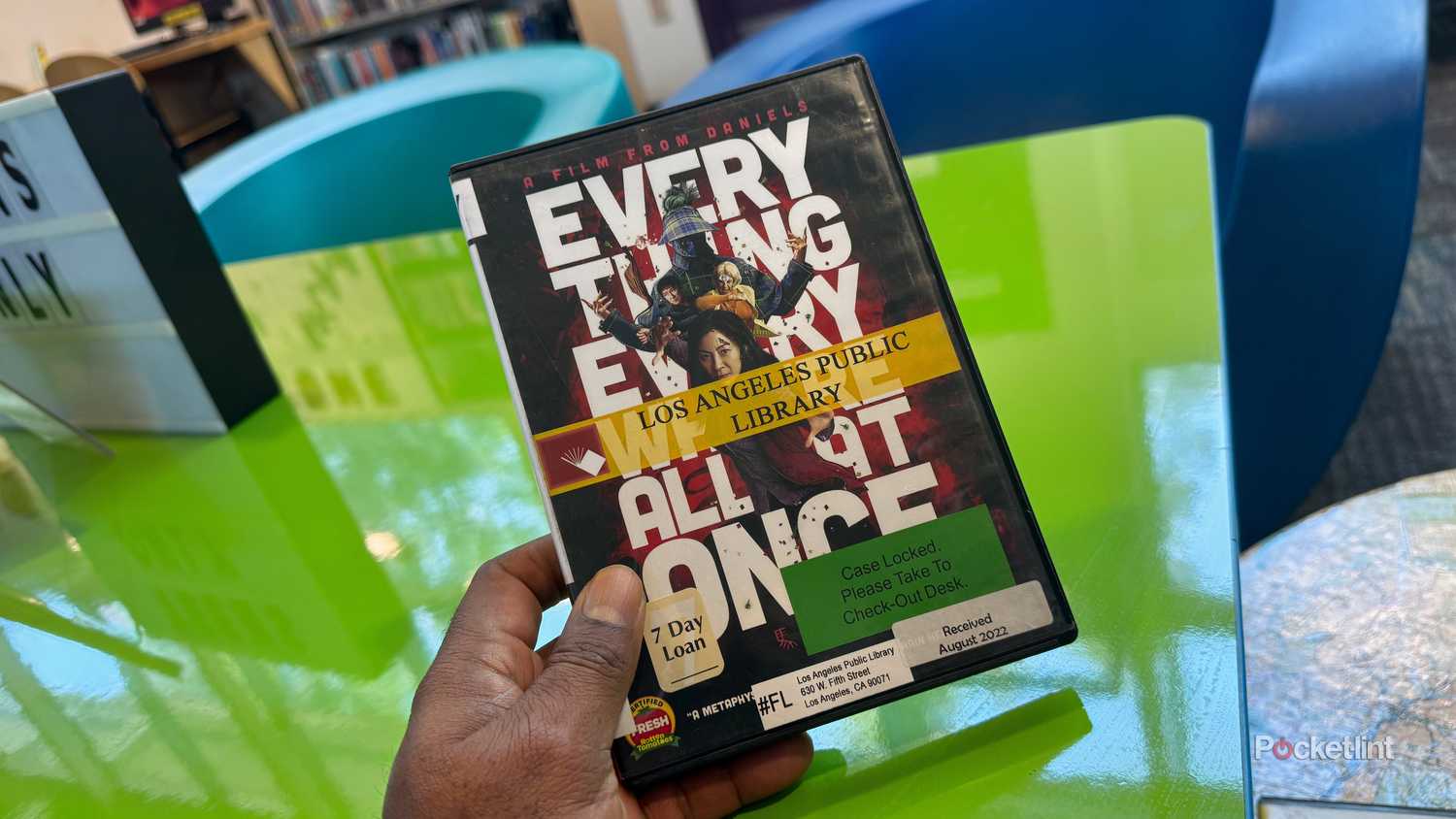
DVDs are rare in the history of physical media in that they’ve thrived long past the arrival of newer, technically superior options. Blu-ray has been around since 2006 — yet you can buy new DVD players and freshly-minted discs. Want to watch Project Hail Mary? There’s an official DVD version, and you might even be able to pick it up at a local retail outlet.
If you only care about collecting new DVDs, you’re safe. When you’re bargain hunting, though, it’s important to remember that the medium is old enough that some discs may already be unplayable. The Canadian Conservation Institute estimates a 10- to 20-year lifespan for commercial discs, and the first releases reach back to 1996. While proper care can help stretch things out, on a long enough timeline, factors like oxidization and UV exposure will inevitably take their toll.
VHS tapes are even more tenuous. The last big Hollywood release was David Cronenberg’s A History of Violence in 2006, so unless you’ve got a copy or a boutique product, anything you pick up will be at least 20 years old. Every tape is subject to magnetic particles gradually losing their charge over time — so even before something becomes completely unwatchable, it might display noise, blackouts, or discoloration. This is assuming the wear of playback and rewinds doesn’t snap the tape prematurely.
You can get around these problems by ripping discs and tapes to a media server. At that point, though, you might as well consider Blu-ray, which will get you better archival quality.
The fidelity gap is too enormous to ignore
How often will you really watch your collection?

Normally, I avoid being a purist when it comes to home theater topics. Content is king, and focusing too much on fidelity and specs can detract from that. As I like to say, it’s not as if people watching Raiders of the Lost Ark on VHS in the ’80s were lamenting the absence of 4K HDR or Dolby Atmos. In fact, DVDs still can be quite pleasing, as long as they’re upscaled properly from the highest possible bitrate.
The gap between DVD and newer technologies is increasingly glaring however, mostly as a result of growing screen sizes. The flaws linked to upscaling 480p to 1080p or 4K may not be such a worry on a 40-inch TV, or even a 50-inch one. Today, though, it’s increasingly common for people to own sets over 60 or 70 inches, a size at which the differences between 1080p and 4K start to become noticeable. While you can always duplicate pixels and smooth edges, you can’t insert detail where there wasn’t any, which sometimes results in a “plastic” effect with DVDs.
Once again, VHS tapes present additional complications. On top of low resolution and their (likely) accelerated physical deterioration, modern TVs don’t really know what to do with analog signals. You’ll get something onscreen if you can find the right HDMI adapter for your VCR, but a variety of problems remain, such as 4:3 images being stretched out to 16:9. You may need a specialized upscaler to fix everything, and you’ll still get an image that can’t compete with DVD, much less Blu-ray.
I do like the idea of popping VHS tapes into a combo CRT/VCR set. But I’m not about to spend a few hundred dollars on one from eBay, not when that money could pay for subscriptions to Netflix, Disney+, or YouTube Premium Lite. While only YouTube includes 4K HDR at no extra charge, even 1080p SDR streaming tends to blow DVD out of the water.
All those discs and tapes need to go somewhere (and come with you)
The preservation problem

I vividly remember the moment I swore off collecting (most) paper books. I was moving out of my family home with my brother, and the bag we’d filled was so heavy and cumbersome that it was the next-worst thing to carry after our then-giant CRT TV. For me, any downsides to a tablet or e-reader are easily offset by their portability.
DVDs and VHS tapes are lighter than novels, and not a big deal if you’ve only got a handful of them. DVDs can be stuck into binders. The more you have of either, though, the harder it becomes to find places to store them, and the trickier they are to take with you when you move. I’ve become particularly sensitive to that last point. In a little over 10 years, I’ve moved five times, and I’m on the verge of my sixth. I’d rather save my precious transportation space for things like clothing, electronics, and furniture instead of a few dozen discs and tapes.
Something that’s too often ignored is preserving media in the right conditions. If you want them to last as long as possible, both DVDs and VHS tapes are best stored in cool, dry places out of the sunlight. It’s also important to avoid dust and friction. Those can be tougher requirements than you might think, and I’d rather not rearrange other aspects of my life to keep media I might not play that much, if ever again.
I’m too used to watching things when and where I want to
Not all of us can schedule movie nights

Famously (or infamously, depending on your perspective), David Lynch once went on a short tirade against the idea of watching a movie on a smartphone. By 2017, however, he’d changed his mind, presumably because phones had grown dramatically in size, and improved in just about every other dimension too.
Don’t get me wrong, I’d always rather watch a movie in theaters or my TV, given the choice. But I don’t always have that liberty, and there are circumstances in which watching on a small screen is actually preferable. When I travel, something I love to do is spend a flight indulging in a movie or TV show on my iPad. Because there’s nothing else to do, I can watch uninterrupted, which is a luxury once you start a family.
VHS tapes automatically anchor you to one place, since VCRs are rare enough without trying to track down a portable one. DVDs are better for going mobile — unfortunately, it’s still impractical to pack more than a few of them on a trip, and most laptops no longer come with an optical drive of any kind. Buying a portable drive just to watch discs on a trip is a little gratuitous.
I’ve been spoiled by the ability to sign into an app and access an entire library at will. In fact, it’s reassuring — while streaming services can lose the rights to content, or take it away, I don’t have to worry about losing my favorites to theft, fire, flooding, or merely the ravages of time.

- Brand
-
Apple
- Storage
-
128 GB
- CPU
-
A16
- Operating System
-
iPadOS