






Summary
- I run Plex and Jellyfin side-by-side, using whichever makes sense at the moment.
- Plex is the easy pick for sharing and remote access; Jellyfin is my instant, tweakable local app.
- Running both gives me redundancy and a sandbox; Jellyfin’s matured enough to be my primary choice.
The self-hosted media community loves to treat Plex and Jellyfin as opposing sides of the same coin, which, for the most part, they are. Those who like Plex’s polished interface and feature set are expected to overlook its increasingly commercial direction. On the other hand, if it’s Jellyfin’s open-source philosophy and complete control you value, you’ll have to accept plenty of rough edges in exchange. Like most folks, I assumed the end goal was to choose one over the other.
Then, I just stopped trying. Rather than replacing Plex with Jellyfin altogether, I now have them installed side by side, with both pointed at the exact same media libraries. Now, I just use whichever one makes more sense for the moment. Truth be told, I expected this to be a temporary experiment, but this has now become my permanent setup. Turns out, these two media servers complement each other far better than they compete.
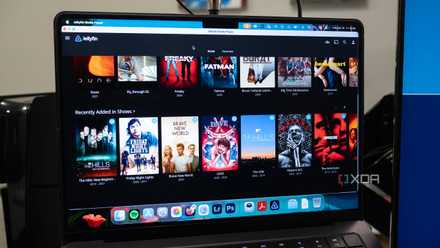
Jellyfin is 90% of Plex, and the missing 10% doesn’t matter to me
Free and open source over greedy subscriptions
Plex is still the easiest way to share my library
Even so, Jellyfin doesn’t have to replace it to be useful

The biggest reason Plex continues to earn a place on my server has actually very little to do with me — it’s everyone else. Whether it’s family members watching remotely, friends borrowing a movie, or my partner picking something to watch from the couch, Plex remains the easiest recommendation. The apps are polished and easy to use for all ages, and there’s literally just one client to download across all platforms. Above all, remote access is almost effortless, and nobody needs a lesson or a screen-sharing call to start streaming my media library.
Still, that doesn’t mean I want to do all my own viewing through Plex anymore. In fact, I rarely do. When I’m home on my local network, Jellyfin is often the first app I open. It launches instantly, it connects with absolutely no need for external authentication, and it definitely feels purpose-built for someone who already understands their own server. It’s pretty refreshing to see a media platform that simply gets out of the way.
The price of the Plex Lifetime Pass is about to increase from $250 to $750 from July 1st, 2026.
Instead of forcing one application to satisfy two completely different audiences, I’ve let each play to its strengths. Plex has now become the media server I recommend to everyone else, while Jellyfin has quietly become the one I actually enjoy using myself. It was only after I stopped expecting either of them to excel at everything that I saw the “compromises” finally disappearing.
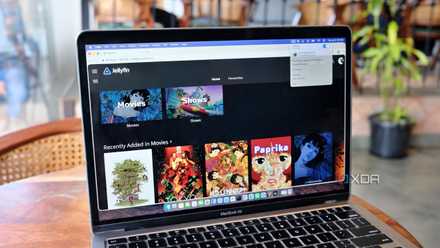
I switched to Jellyfin, but Plex’s one real advantage keeps pulling me back
Freedom isn’t always frictionless
Jellyfin lets me experiment without risking my main setup
One library, two completely different experiences
Something I’ve grown to really like about Jellyfin is just how unapologetically customizable it is. I can test new plugins, experiment with metadata providers, tweak CSS themes, or try community-built extensions, all without worrying about accidentally disrupting the media server my family relies on. Effectively speaking, Jellyfin has become my sandbox.
It’s that freedom that changes the way I approach self-hosting. I don’t hesitate at all to install a new plugin or modify the interface. Instead, I just go ahead and try it, because there’s absolutely nothing to lose. If something does go south, all I have to do is uninstall it and move on. Meanwhile, Plex will continue doing exactly what it’s always done, which is reliably serve content without anyone noticing that I’ve made something go awry behind the scenes.
That’s it, so to speak — I’ve completely separated experimentation from reliability, and it has made me appreciate both platforms even more. I don’t need Plex to be endlessly customizable, and I don’t need Jellyfin to prioritize simplicity over everything else. Both servers have room to embrace their own different philosophies, and by running both, I get to enjoy the benefits of each without inheriting either’s compromises.
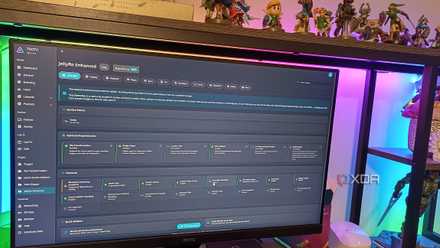
This is the one Jellyfin plugin I’d never uninstall
It’s almost everything I could ask for in a single plugin.
Turns out, redundancy is a pretty useful feature

Self-hosted software is remarkably reliable… until the one evening when it breaks down for some reason, and you actually need it. Even Plex might decide that it can’t authenticate because an update introduced an unexpected bug. Whatever happens, there’s always a chance that the one application you depend on isn’t available when movie night begins.
In situations like these, having both media servers already configured has paid for itself several times over. Since both of these servers point to the same storage, switching takes all of a few seconds. I don’t have to frantically troubleshoot things while everyone waits, and there’s no possibility looming of canceling evening plans. I just have to pick up the remote, open a different app, and keep watching.
This redundancy requires zero additional effort after the initial setup, too. Both servers scan the same folders, organize the same movies, and maintain their own databases independently, after all. Now, this convenience might feel overkill or unnecessary, but when it does save the day, you’ll end up wondering why you ever relied on a single point of failure in the first place.
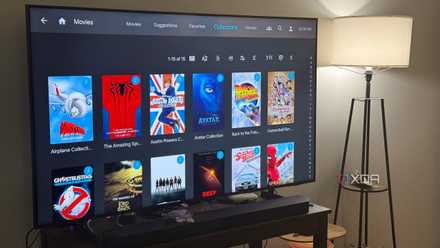
6 Jellyfin plugins that add free features Plex charges you for
Jellyfin’s plugin ecosystem does what Plex charges for, and it’s free
I stopped thinking of Plex and Jellyfin as competitors
They’re solving different problems now

For the longest time, I approached Plex and Jellyfin like competing products fighting for the same job. Every update, feature, announcement, or community discussion reinforces the idea that one needs to eventually replace the other. The longer I ran them together, though, the more obvious it became that this comparison no longer reflected how I actually used either platform.
Plex is fantastic at convenience, and Jellyfin simply can’t beat that. Jellyfin, on the other hand, is all about ownership, and that’s not something Plex can boast about. The former is about making media effortless to access from anywhere, while the latter prioritizes putting every aspect of the experience under your control. Of course, these overlapping goals do invite comparisons, but they’re not identical. These are completely different philosophies built around the same collection of movies and TV shows.
After accepting this, I’ve stopped choosing either one, because frankly, it doesn’t make sense anymore. My server doesn’t care which application indexes the media sitting on my hard drives, and neither do I. All that matters is that I no longer feel like I’m compromising either way, since each platform fills the role the other doesn’t quite replace.

- OS
-
Windows, macOS, Linux
- Individual pricing
-
Free, $6.99/month, $250/lifetime
Plex is the premier home media server software for replacing your streaming subscriptions.
If I were starting over today, my decision wouldn’t be so obvious
For a long time, I viewed Jellyfin as a promising alternative that wasn’t quite ready to become my primary media server. That’s no longer how I see it. The open-source server has matured into a rather impressive, polished platform now, and it deserves a place alongside Plex without being considered a backup. Jellyfin really is a proper, genuine first-choice application, depending on what you value most, of course.
The only reason Plex continues to occupy the driver’s seat on my server is because I already own a lifetime Plex Pass and have years invested in its ecosystem. If I were starting my media server from scratch today, I wouldn’t rule out building everything entirely around Jellyfin. That’s probably the highest compliment I can give for an open-source project that has quietly grown from an enthusiast recommendation into software that’s genuinely ready for prime time.