





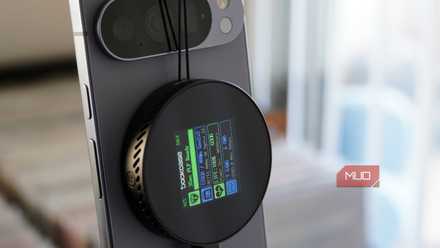
One of the most interesting factoids about smartphones is that battery capacity varies significantly depending on where you are based. You may not be aware, but smartphones in the US are often limited to around 5,000 mAh (although this is slowly changing)and are usually made with lithium-ion rather than the newer, denser Silicon-carbon technology.
If you look beyond the US market, the picture changes dramatically across all price points. The biggest battery on a commercial phone? The Realme P4 Power, which is sold in India, has a 10,001 mAh battery. Yes, really! I’ve tried it, and this reminds me of the Nokia Communicator of old, i.e., it’s unbeatable.
It’s not just regular smartphones, either: folding phones in the US either feature thin designs and smaller batteries or large batteries and thicker designs, rather than the thinner-design, large-battery approach outside the US.
Why does this pattern exist? Why do phones outside the US have larger batteries with fewer tradeoffs around thickness and design? It turns out there are a few reasons, largely thanks to federal regulations.
Phone makers can’t easily include any battery size they want
There’s a key reason why 5,000 mAh is the limit

For the Realme P4 Power launch earlier this year, I flew to China and sat down with their executives to discuss the new phone and its insanely large battery. As part of that discussion, they highlighted a key fact about smartphones and batteries: the US, EU, and other core markets have limits on the size of batteries that can be air-shipped without additional charge.
In the US, this limit is 20 watt-hours — roughly 5,000 mAh—which is part of federal aviation and transportation safety regulations. You’ve probably never heard of 49 CFR 173.185, but you will probably recognize the scary-looking hazardous symbol on the box that a gadget often ships in.
There are two terms you need to know: one is familiar, and one may not be. Federal agencies and regulations for batteries are expressed in Watt-hours (Wh), and the same regulations cover power banks on flights (which are limited to 100 Wh).
Why do phone batteries use a separate terminology, you may be wondering? The answer is because the individual power draw of each component is measured in milliamps (mA), because that’s not confusing at all!
Yes, cost definitely plays a big part
When shipping adds $100+, you can bet that your gadgets will increase considerably more.

Phone makers have a very obvious reason to stay within these limits, as exceeding them would require a Dangerous Goods label. The designation adds considerable costs at every stage of the process, as each party involved has additional obligations to meet.
How much does it actually cost? A brief look at major couriers reveals that FedEx Express will add an Accessible Goods Fee (AGF) of around $132, while UPS can charge up to $150. This is for products that require opening during inspection, but for smartphones (which are considered inaccessible and can’t be opened for inspection), this can still add up to $75 per shipment.
Another issue phone makers have to contend with is that some shipping and logistics partners have their own limits. I’ve spoken to multiple phone makers and have been told that their current logistics supply chains and agreements may not allow them to store and ship products with batteries above a certain threshold. This would mean they need to find a separate partner just for that product, further increasing the costs they have to incur.
Wait, some phones have more than one battery?
As always, there’s a smart workaround!

As I mentioned, we are seeing a slight change in the US as more companies explore and adopt silicon-carbon technology. First, a quick primer: silicon-carbon technology is much denser, enabling phone makers to fit a larger battery in the same footprint. How much more? That’s dependent on the type of silicon-carbon technology and implementation used, but gains of up to 25% are possible.
Despite silicon-carbon being denser, it doesn’t materially affect the regulations’ meaning, as they still regulate the size at 20Wh. However, it enables phone makers to include more than one battery without making the smartphone thicker.
The Honor Magic V6 above offers a 6,660 mAh battery, despite being just 4.1mm thick when unfolded.
The added bonus? The federal regulations govern each battery, not the overall capacity, which is why you can fly with a power bank that’s 5 times your phone’s capacity. Denser battery technology means you can split a 6,000 mAh battery into two — either identical in size or asymmetrical — without materially increasing the phone’s thickness. This is perfect for folding phones, and we’ve already seen Motorola go down this path with the Motorola Razr Fold.
The Galaxy Z Fold 7 has a 4,400 mAh battery, but the Motorola Razr Fold? It has a 6,000 mAh battery. There is around a 0.4mm difference in thickness between the two phones when unfolded, and although there are hundreds of other differences under the hood, the density of the battery technology will be a key reason the Razr Fold has a much larger battery.
Which phones have the largest batteries in the US?
How far behind is the US, really?

Ok, so Motorola’s folding phone has a large battery, but what other phones have larger batteries, and do they use silicon-carbon or lithium-ion? As we’ve covered, the pickings are slimmer than they are abroad, so we’ve included a few global examples below as well. For foldables, the thickness is the minimum thickness when unfolded, i.e., the listed thinnest point of the phone.
Phone | Type | Thickness | Battery size | Battery Tech | Sold in the US? |
|---|---|---|---|---|---|
Samsung Galaxy S26 Ultra | Flagship | 7.9 mm | 5,000 mAh | Lithium-Ion | Yes |
Apple iPhone 17 Pro | Flagship | 8.8 mm | 4,252 mAh | Lithium-Ion | Yes |
Motorola Signature | Flagship | 7.0 mm | 5,200 mAh | Silicon-Carbon | No |
Honor Magic 8 Pro Air | Ultra-thin | 6.1 mm | 5,500 mAh | Silicon-Carbon | No |
Apple iPhone Air | Ultra-thin | 5.6 mm | 3,149 mAh | Lithium-Ion | Yes |
Samsung Galaxy S25 Edge | Ultra-thin | 5.8 mm | 3,900 mAh | Lithium-Ion | Yes |
Motorola Razr Fold | Foldable | 4.7 mm | 6,000 mAh | Silicon-Carbon | Yes |
Samsung Galaxy Z Fold 7 | Foldable | 4.2 mm | 4,400 mAh | Lithium-Ion | Yes |
Google Pixel 10 Pro Fold | Foldable | 5.2 mm | 5,015 mAh | Lithium-Ion | Yes |
Oppo Find N6 | Foldable | 4.2 mm | 6,000 mAh | Silicon-Carbon | No |
Honor Magic V6 | Foldable | 4.0 mm | 6,660 mAh | Silicon-Carbon | No |
There are two holdouts keeping silicon-carbon technology from becoming mainstream: Apple and Samsung. The former has not discussed its plans regarding silicon-carbon technology (and I wouldn’t expect it to), while Samsung has already confirmed that it is exploring the use of the technology in upcoming products.
Soon enough, your phone will have a larger battery, and it’ll be a much better power bank in an emergency as well. At least now you know why the battery is much larger than before!

- SoC
-
Qualcomm Snapdragon 8 Gen 5
- RAM
-
16GB
- Storage
-
512GB
- Battery
-
6,000mAh silicon-carbon
The Motorola Razr Fold is a formidable challenger to Google and Samsung foldables in the U.S., complete with a 6,000mAh silicon-carbon battery and stylus support on both of its screens. It packs slick Pantone colorways and an 8.1-inch foldable OLED display. Plus, it can charge at a whopping 80W over a cable and at 50W wirelessly.


